What Is Copywriting and Why It Matters?
Copywriting isn't just “writing fancy words.” It's writing to get people to take action . Whether you want them to click a button, sign up for a newsletter, or actually buy something, copywriting is about persuasion, clarity, and connection .
Think of it as your superpower to get people to notice, care, and act — without sounding pushy. At Yuvabe, we’ve seen how small, purposeful adjustments in tone, storytelling, and structure can transform content from “meh” to memorable.
Here’s a breakdown of the core copywriting strategies every brand should know — and how to put them into practice:
Core Copywriting Tricks That Work
1. Know Your Audience
Knowing your audience means more than just demographics. It's about understanding their motivations, challenges, and desires. Think of it like talking to a friend who trusts you—you know what will make them nod, smile, or act. When you understand your audience, your copy doesn't just inform—it connects.
Example:
- Nike : Inspired by their “Winning Is't for Everyone” campaign — “You don't run to beat someone else. You run to be better than yesterday.”
- Why it works: Nike connects with runners' personal drive it's about being better than yesterday, not beating someone else. That emotional focus makes the message memorable and motivating.
Tip : Create detailed personas with age, job, habits, challenges, and goals. Use these insights to shape your tone, content, and call-to-action.
2. Use the Right Tone
Tone is the personality of your writing—it sets the mood and builds trust. A casual, funny tone works for a young, social audience, while a professional, authoritative tone suits B2B readers. Tone consistency across your channels strengthens your brand and helps people recognize and relate to you.
Example:
- Mailchimp : “Send better emails. Even if you're not a tech wizard.”
- Why it works: Mailchimp is approachable and friendly, making tech feel easy.
Tip : Before writing, ask: What voice would my audience expect from this brand? Then write like that person is listening.
3. Highlight Your Unique Value
Your audience doesn't automatically know why you're special. Clear, compelling copy shows why you're different and better. It answers the unspoken question: “Why should I care?”
Example:
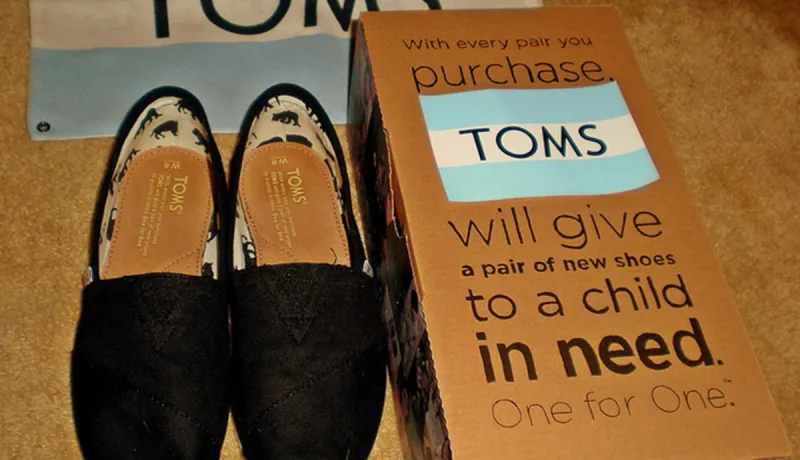
- TOMS Shoes : “With every pair you purchase, TOMS will give a pair to a child in need.”
- Why it works: The copy emphasizes both product and impact. Customers don't just buy shoes—they participate in social good.
Tip : Focus on benefits, not just features. Ask: “What will the reader gain?” Make this the centerpiece of your copy.
4. Tell Stories
People remember stories far longer than facts. Stories create emotion, help readers visualize themselves using your product, and make your brand memorable. Even small anecdotes or humorous examples can make copy more engaging.
Example:
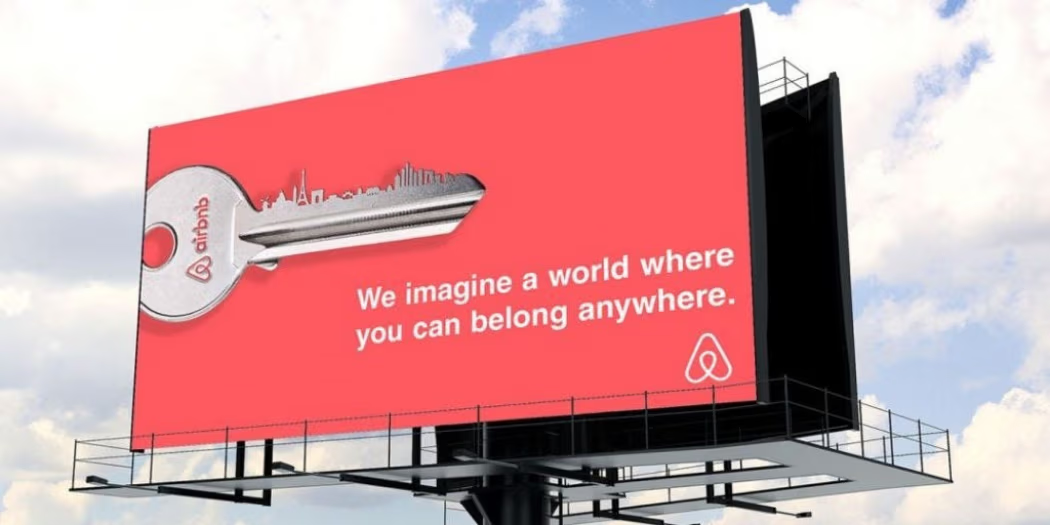
- Slack : “When you stay in a local home, you don't just visit—you live like a local.”
- Why it works: Instead of listing amenities, Airbnb paints a vivid picture of the experience, making it aspirational and relatable.
Tip : Structure stories with context, characters, and resolution. Show a problem being solved through your product or service.
5. Address Pain Points
People buy solutions to their problems, not products. Effective copy identifies a challenge your audience faces and presents your brand as the solution. This approach shows empathy, builds trust, and increases conversion.
Example:
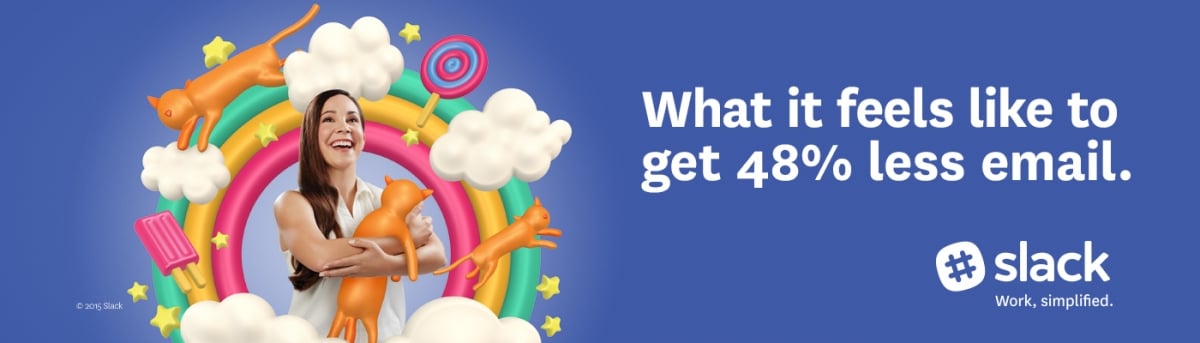
- Slack : “Stop chasing emails. Communicate faster with your team.”
- Why it works: It addresses a common frustration—slow email communication—and positions Slack as the immediate fix.
Tip : Make a list of the biggest challenges your audience faces. Use your copy to empathize and then offer relief.
6. Social Proof
Humans are social creatures. Seeing that others trust your brand builds credibility and lowers the perceived risk of trying your product. Reviews, testimonials, and case studies make your brand believable.
Example:
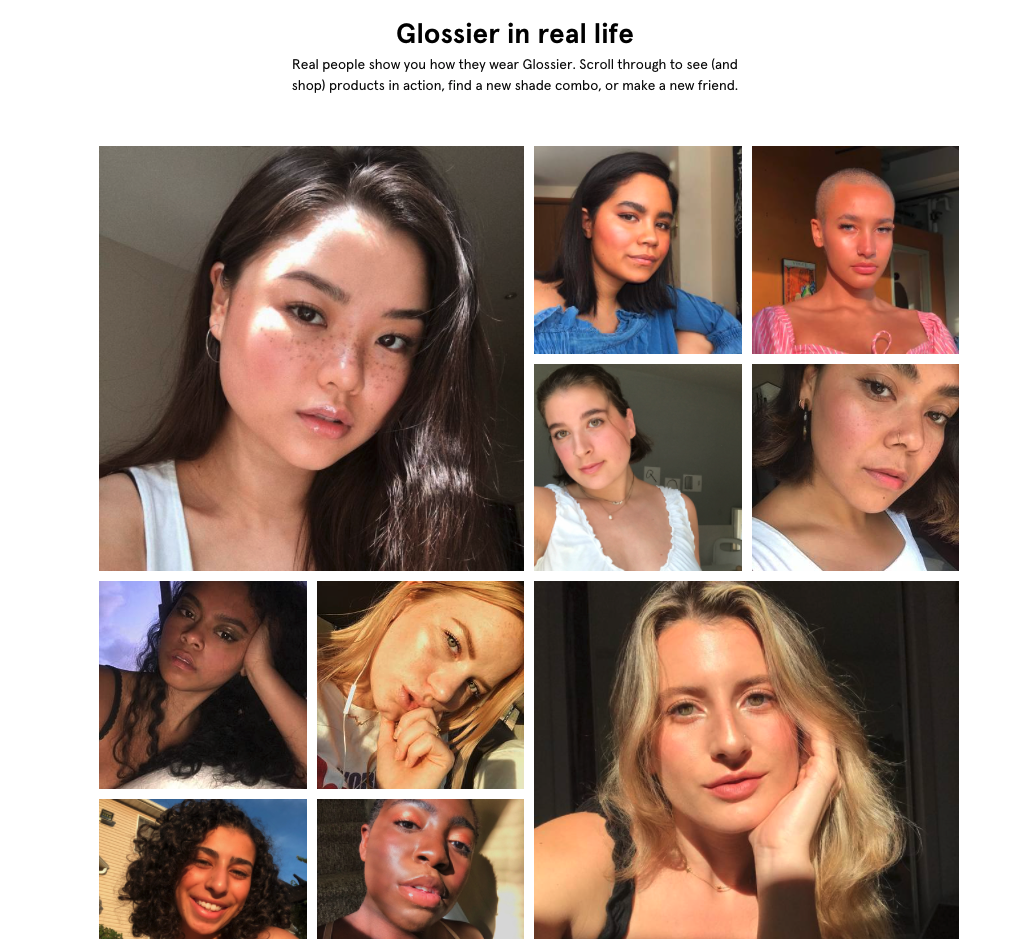
- Glossier : “Over 1 million happy customers.”
- Why it works: Numbers and testimonials reinforce trust. Potential buyers feel safe following others' experiences.
Tip : Use real, specific testimonials. Photos, names, and data make social proof stronger.
7. Clear & Crisp Language
Good copy gets to the point. Avoid fluff or jargon that slows down reading. Every word should serve a purpose —i nform, persuade, or excite. Crisp copy respects your reader's time and increases engagement.
Example:
- Apple : “Think different.”
- Why it works: Simple, memorable, and instantly communicates brand philosophy.
Tip : Edit ruthlessly. Remove unnecessary words and phrases. Read aloud — if it sounds complicated, simplify.
8. Test Everything
What works for one audience might flop for another. Testing headlines, CTAs, formats, and placements helps you see what actually converts, rather than guessing.
Example:
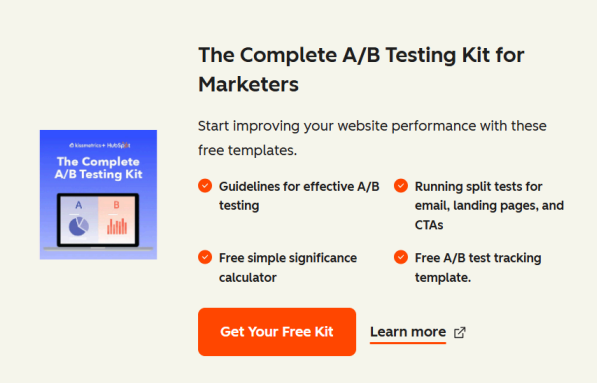
- HubSpot : A/B tests email subject lines to maximize open rates.
- Why it works: Small tweaks like wording, length, or emojis can significantly affect engagement.
Tip : Test one variable at a time. Use data to refine your approach continuously.
9. Use Numbers & Stats
Numbers make your copy believable. People trust data, and concrete results are more persuasive than vague promises.
Example:
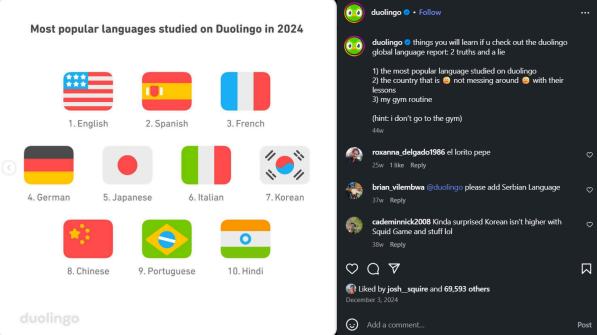
- Duolingo : “Most popular languages studied in 2024”.
- Why it works: Specific numbers set clear expectations and make progress tangible. Learners know exactly what they'll achieve, which motivates action.
Tip : Use statistics, percentages, or timeframes wherever possible to reinforce your claims.
10. Ask Questions
Questions engage readers, spark curiosity, and make them pause to think. This is a great way to draw attention and encourage interaction.
Example:
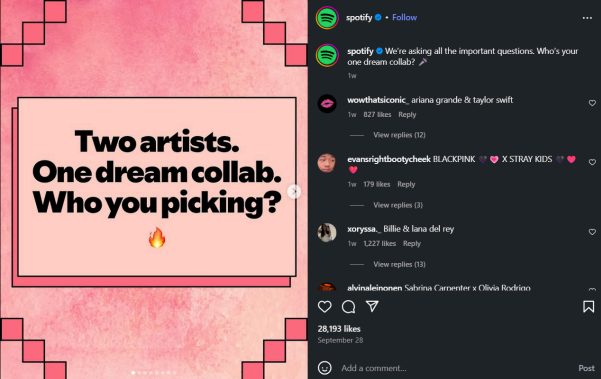
- Spotify : “Who you picking?”
- Why it works: The question invites participation, making the user feel included and prompting action.
Tip : Ask questions that resonate with your audience's interests, needs, or desires.
11. Power Words
Certain words trigger emotion or urgency. Words like instantly, proven, limited, or exclusive capture attention and drive action.
Example:
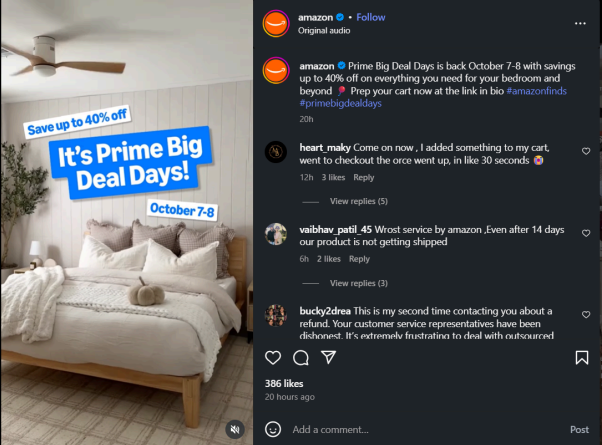
- Amazon : “Limited time offer—buy now!”
- Why it works: Creates urgency and excitement, encouraging immediate action.
Tip : Use power words sparingly and naturally. Too many can feel pushy or spammy.
12. Repeat Key Points
Repetition reinforces your message and helps it stick. Highlight benefits and calls-to-action multiple times throughout your copy—but naturally, not redundantly.
Example:
- Dropbox : Multiple posts highlighting that the Sundance Film Festival used Dropbox.
- Why it works: By repeating the association with a respected event, Dropbox reinforces credibility and ensures the audience remembers both the product and its relevance.
Tip : Emphasize your strongest value propositions at least 2 – 3 times in longer copy.