1. Foundational Layer: Technical SEO + Schema + Accessibility
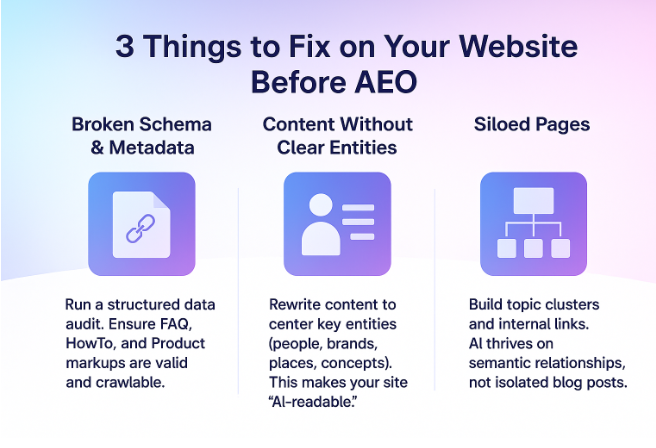
The basics haven’t gone away. Clean site structure, crawlability, Core Web Vitals, schema markup — these are non-negotiable hygiene factors. AI can’t use what it can’t understand.

Published on November 4, 2025 · 8 min read
Why AI isn’t killing SEO — it’s forcing it to evolve into something more strategic, semantic, and human.
– By Priya, Ui/Ux Mentor & Pratice Lead - Digital Marketing, Yuvabe Studios
Search behavior is undergoing a seismic shift — not because keywords have lost their power, but because the way people discover, consume, and trust information has evolved.
Today, that's changing. In a world where digital experiences shape brand perception more than ever, emotional response has become a core UX metric. Whether it's the sense of calm in a meditation app, the confidence you feel making a banking transaction, or the thrill of unlocking a gaming reward — emotional resonance determines whether users return, advocate, and ultimately, trust your brand.
This isn't a small update. It's a structural shift.
And this is where AI Engine Optimization (AEO) enters the picture.

Caption: Traditional keyword-based strategies (left) are giving way to structured data and semantic relationships (center), ultimately powering AI engines that deliver entity-based answers (right)
AEO (AI Engine Optimization) is the emerging discipline of optimizing content and brand presence for AI models and answer engines, not just for search crawlers.
This is why brands that cling to old SEO tactics such as keyword stuffing, thin content, shallow listicles are slowly becoming invisible in the AI layer of search.
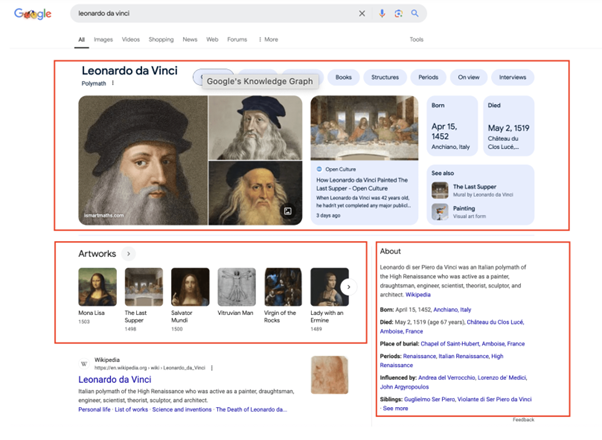
(Caption: Google’s Knowledge Graph in action p: A search for “Leonardo da Vinci” surfaces interconnected entities (person, artworks, periods, influences) — a clear example of semantic search at work.)
Every time a new technology emerges, we hear “SEO is dead.” We heard it during the rise of mobile first strategies. During voice search. During the Core Web Vitals rollout. Each time, SEO didn't die — it evolved.
But this moment is different because the discovery interface itself is changing. Users are:
This means SEO is moving from a game of “traffic volume” to a discipline of “information architecture + semantic authority + brand trust.”
If traditional SEO was about ranking higher, the future is about being the most trusted entity in your domain — the one AI answers with.
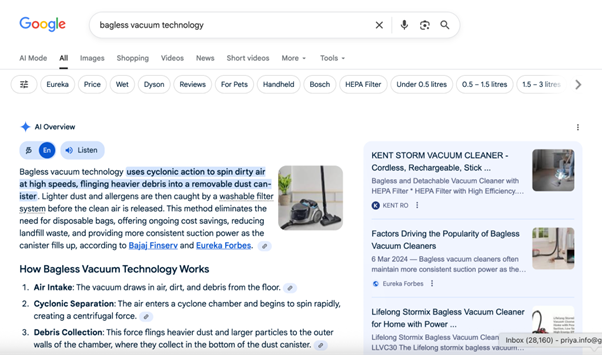
(Caption: An example of Google's Search Generative Experience (SGE) displaying an AI Overview on top of traditional search results — marking the shift from keyword-based ranking to AI-powered entity answers.)
SEO in 2025 should be approached as a three-layer strategy:
The basics haven’t gone away. Clean site structure, crawlability, Core Web Vitals, schema markup — these are non-negotiable hygiene factors. AI can’t use what it can’t understand.
Instead of chasing hundreds of keywords, we build structured knowledge architectures. This includes:
This approach turns your website from a “collection of pages” into a semantic graph that AI can map, summarize, and trust.
This is where many fail. AI tools can generate content — but they cannot replicate lived expertise, case studies, point of view, or trust signals. We inject:
This combination of machine readability + semantic structure + human depth is what AEO thrives on.
| Aspect | Traditional SEO | AEO (AI Engine Optimization) |
|---|---|---|
| Focus | Keywords & Rankings | Entities, Semantic Structure & Authority |
| Output | SERP Results (Top 10) | AI Answers / Summaries / Featured Citations |
| Optimization Unit | Individual pages | Topic clusters / Knowledge graphs |
| Language Style | Keyword-optimized | Conversational, clear, answer-focused |
| Trust Signals | Backlinks, domain authority | E-E-A-T, structured data, entity linking |
Designing “for feelings” doesn’t mean adding decorative elements — it means orchestrating every interaction to evoke a specific emotional state, consistently and intentionally.
Focus less on “best CRM tools” and more on “How can small businesses automate customer engagement in 2025?” because AI surfaces answers, not keyword matches.
Instead of 100 thin blogs, invest in 10 deep, structured, reference-worthy content pieces that become the “go-to” for AI engines.
Build interconnected hubs around themes (e.g., “sustainable beauty,” “on-device AI,” “emotional UX”), so AI recognizes your site as an authority graph.
Use schema, FAQs, HowTo markup, and entity-based optimization to feed AI with clean signals, not just hope it “gets it.”
SEO now involves content strategists, UX designers, developers, data analysts, and AI specialists working together. It’s no longer a marketing bolt-on; it’s a strategic layer of brand visibility.
Here’s the twist: As AI intermediates search, brand recognition and emotional trust become even more important. When users see a summary or a single recommended source, they’re more likely to click on a brand they already trust.
So ironically, AI is making strong brands stronger — and invisible brands more invisible. This means SEO in 2025 is not just about optimizing for search engines, but also about building reputation capital that AI respects.
SEO is not dying — the way we do SEO is. In the age of AI optimization and AEO, ranking well means structuring your content like a knowledge graph, writing like a trusted human, and thinking like an AI.
At Yuvabe Studios, we’re helping forward-thinking brands build future-proof discoverability systems — blending technical SEO, semantic architecture, and AI-led insights to not just keep up, but lead.
If you’re ready to make your brand visible in the AI-first search landscape, let’s talk.